We design and develop Magento 2 stores for growing and large businesses: Arabic and English storefronts, a well-organised catalogue for thousands of products, payment and shipping integrations, and multi-vendor marketplaces when you need them. We start with your requirements and a fixed written price, and deliver in stages you can see.
Four honest questions. Magento is powerful, but it is not right for every store, and if something simpler is enough, we will tell you.
From storefront design to maintenance after launch, one team looks after your store at every stage.
A storefront in your brand identity, built on a professional theme we customise or a bespoke design, with product pages that encourage buying.
Custom extensions and features for your store, and integrations with your systems: inventory, accounting, payment gateways and shipping carriers.
A full right-to-left Arabic storefront, translated store, invoices and emails, with multiple languages and currencies.
An easy, fast shopping experience on phones and tablets, from browsing products to checkout.
A marketplace where vendors add their products and manage their orders, with commissions and a separate account for each vendor.
We choose the right extensions, install them and test compatibility, so they do not slow your store or clash with each other.
We upgrade your store to the latest releases and apply security patches, after a backup and testing.
Ongoing monitoring of performance and errors, problem fixing and speed tuning for a better customer experience.
A successful store is not judged by its looks alone, but by how easy the path is from the first visit to the delivered order. So we design every stage of the buying journey with care, and use Magento 2 features to remove the steps that make visitors abandon their cart.
Clear categories and menus, filters by price, size, colour and brand, and fast search that returns results in Arabic and English.
Sharp zoomable images, all product options in one place, a well-structured description, and stock and shipping details before the buy button.
A cart that updates without reloading the page, a coupon field, a clear final total, and suggested products that complete the order.
A short checkout, guest or account purchase, and the payment methods your customers prefer through the payment gateway you sign with.
Order and shipping confirmation emails, a tracking number from the carrier, and an account where customers see past orders and reorder easily.
The result is a Magento store that leads visitors to buy in fewer steps, and an admin panel where your team manages orders, stock and promotions with ease. All of it performs best when the store runs on hosting prepared for Magento.
Every stage gives you something you can see and approve before we move on.
Products and options, languages and currencies, payment and shipping, and the features your store needs.
Requirements doc and fixed priceHome, category, product and cart pages, approved by you before development.
Designs for approvalMagento setup, feature development and payment and shipping integration on a test version.
A test version you can followAdding or migrating products, and testing ordering, payment and shipping end to end.
A fully tested storeWe launch on hosting prepared for Magento, hand over the admin panel and train you on it.
Launch and trainingTimelines, payments and warranty are set out in the agreement; see our design and programming terms.
A fast Magento store comes from layers working together. In Magento development we tune each layer, because one weak layer slows down the whole store.
A short, honest comparison of the two best-known open-source e-commerce platforms.
| Criterion | WooCommerce | Magento |
|---|---|---|
| Best for | Small to medium stores | Medium to large stores |
| Number of products | Hundreds to a few thousand | Thousands to tens of thousands |
| Multiple stores, languages, currencies | Via plugins | Built in, from one admin panel |
| Wholesale prices and customer groups | Via plugins | Built in, extendable with extensions |
| Build cost | Lower | Higher |
| Hosting needed | WordPress hosting | A server or Magento-ready hosting |
| Maintenance | Easier | Needs a specialist team |
| Time to launch | Faster | Longer |
A small or medium store? See WordPress and WooCommerce design. An idea no ready platform fits? See custom programming.
Magento is more than a storefront: it has built-in sales and marketing tools. We set them up during Magento store design so you can start selling from day one.
Run an Arabic store and an English one, or several brands, from one admin panel with shared products and customers.
Show prices in Saudi riyals as the base currency, and add other currencies for customers outside the Kingdom with updated exchange rates.
Discount rules on carts and products: buy two get the third, free shipping above a set amount, single-use coupons and prices per customer group.
Clean editable URLs, a title and description for every product and category, an XML sitemap, and canonical links that prevent duplicate content in Google.
We connect the payment gateway you choose to accept mada, credit cards and Apple Pay, through the Magento 2 extension that the gateway provides.
We connect your carrier to calculate rates and issue the waybill and tracking number automatically, based on the API the carrier provides.
Magento is heavier than WordPress, and most shared hosting is not enough for it. These are its key requirements, and we prepare them for your store at launch so it runs fast and stable.
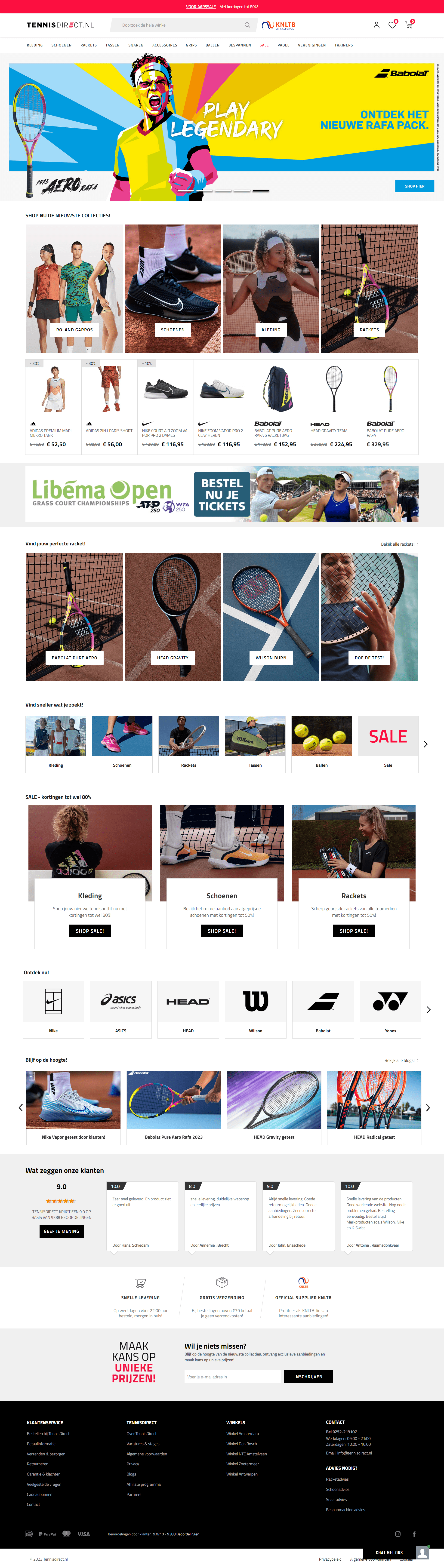
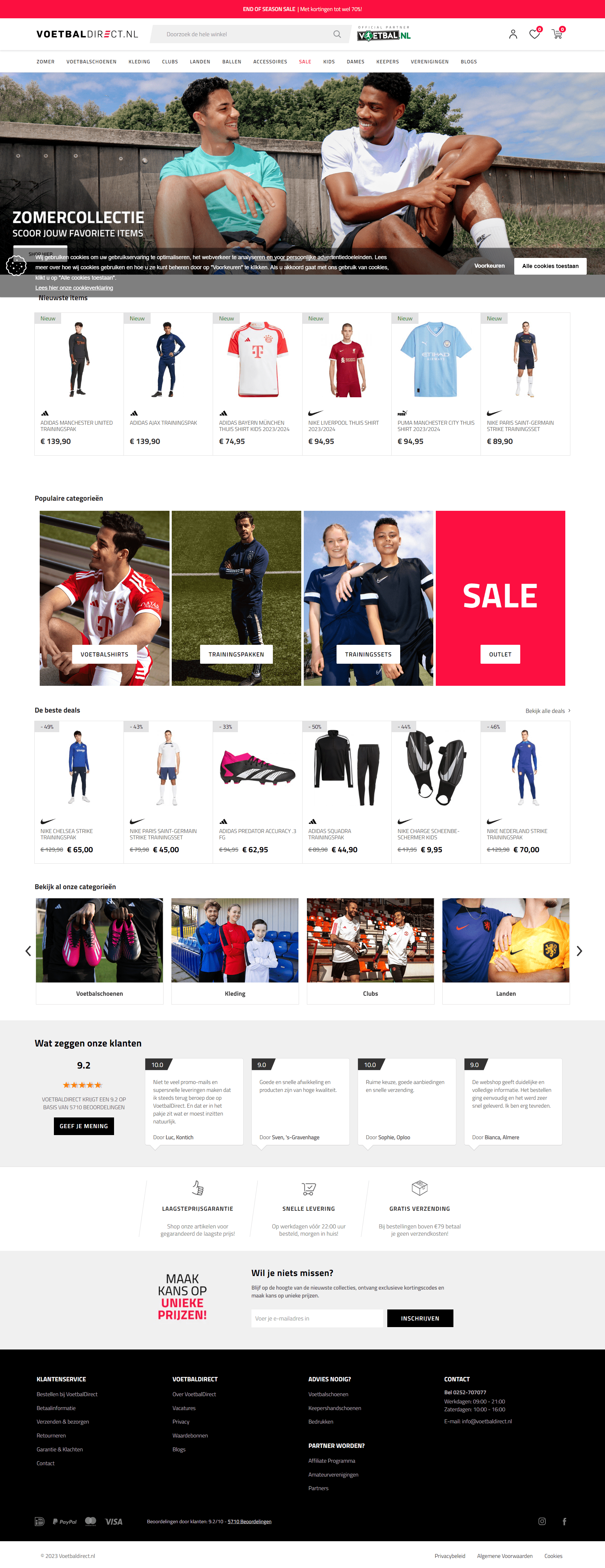
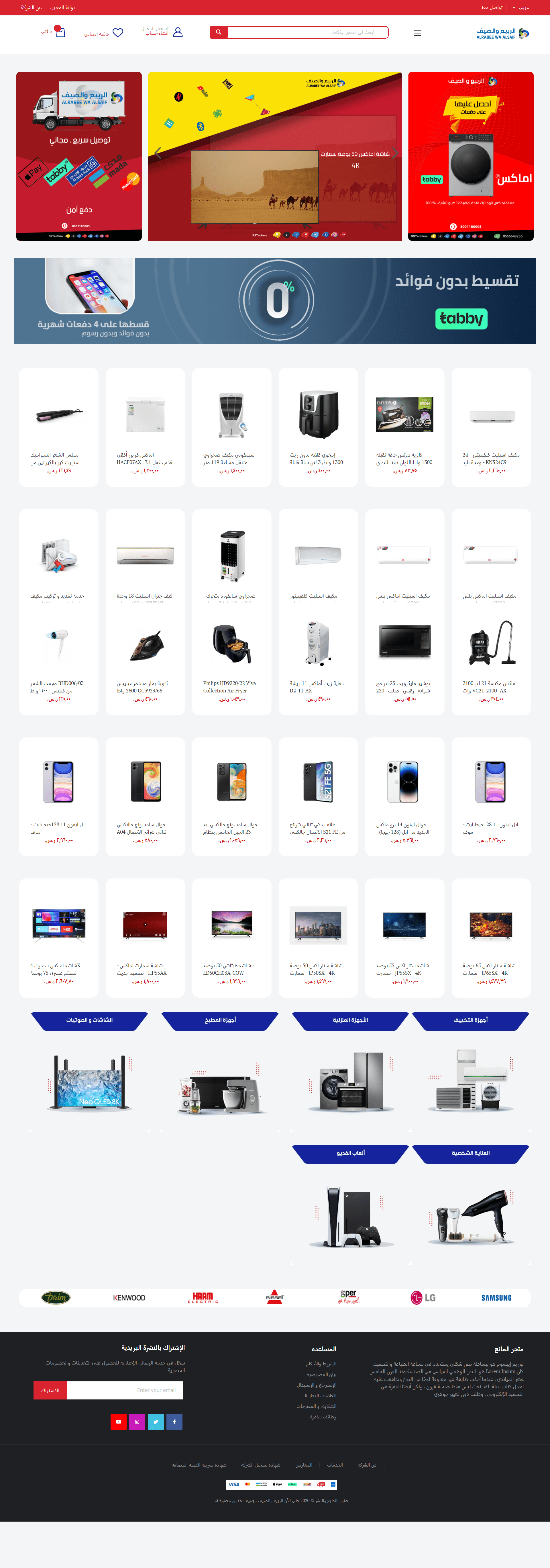
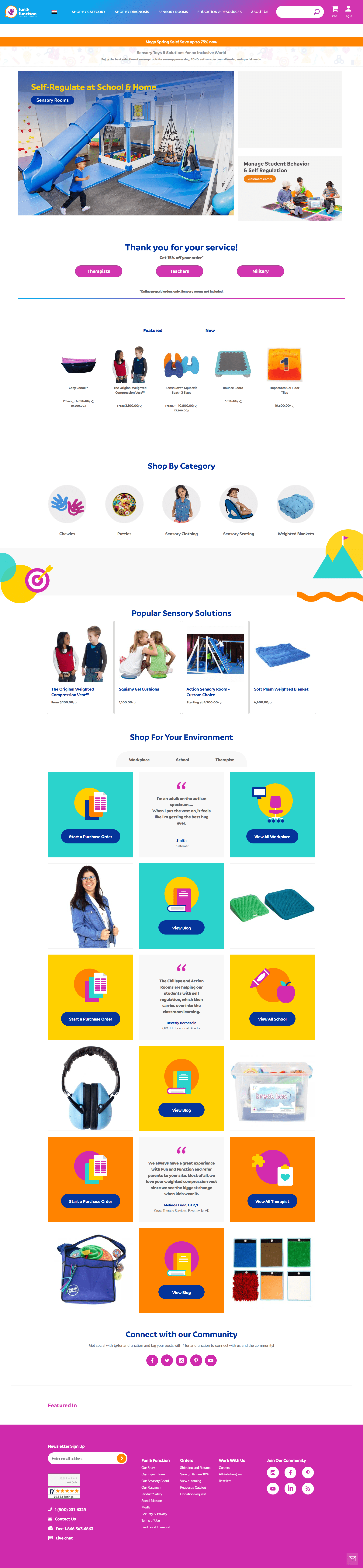
See Magento hostingExamples of Magento stores built by the Hyyat Host team. Hover over a screenshot to scroll through the store.

Did not find your answer? Ask us on WhatsApp or open a ticket.
Magento is an open-source e-commerce platform built in PHP. It suits medium and large stores that need a big catalogue, or several stores, languages and currencies from one admin panel.
It depends on the design (a customised theme or a bespoke design), the number of products and options, extensions, payment and shipping integrations, data migration and languages. We give you a fixed written price once we understand your requirements.
WooCommerce is faster and cheaper for small and medium stores and runs on WordPress. Magento is stronger for large catalogues, multiple stores, languages and currencies, and wholesale pricing, but needs stronger hosting and costs more to build and maintain. Try the "Is Magento right for you?" tool on this page.
Yes. The theme needs right-to-left adjustments and the storefront, invoices and emails need translating, which is what our Magento Arabic localisation service covers.
Yes, we connect your store to the payment gateway and shipping carrier you choose, using the provider's official extension where available, or a custom integration.
Yes, we migrate products, categories, customers and orders as far as your current platform allows, and set up redirects from old URLs so you keep your search visibility.
It depends on the store's size and features; we set the timeline in the agreement after analysing your requirements, starting from the first payment.
More resources than a WordPress site: modern PHP, OpenSearch, enough memory and caching such as Redis. Most shared hosting is not enough, so take a look at our Magento hosting.
Yes, we track security patches and Magento and extension releases, take a backup before every update, fix issues and tune performance.
We agree the payments before starting: one to start and one after you approve the test version; on large projects payments follow the stages. Details are in our design and programming terms.
Magento Open Source is the free, open-source edition that most stores are built on. Adobe Commerce is the commercial edition from Adobe, with an annual licence and extra features for large businesses. We help you choose the right edition for the size of your store.
Yes. Magento supports multiple currencies, so we set the Saudi riyal as the store base currency, and other display currencies can be added with updated exchange rates.
Magento 2 needs a supported PHP version, a MySQL or MariaDB database and the OpenSearch search engine, ideally with Redis and Varnish for speed and enough memory. That is why we recommend a VPS or dedicated server rather than shared hosting.
We enable production mode and full page cache with Varnish, use Redis for sessions, compress images and lazy-load them, remove unnecessary extensions, and measure performance before handover.
Yes. Magento provides editable URLs, a title and description for every page, an XML sitemap and canonical links. During Magento development we also take care of product structured data and page speed, both of which affect visibility in Google.
Yes. Magento 1 reached end of support in 2020 and no longer receives security updates. We move products, customers and orders with the official data migration tool, then rebuild the design and extensions on Magento 2.
Tell us about your store, and we will honestly suggest the right platform and plan.

We use necessary cookies to run the site, and Google Analytics to measure visits only if you agree. You can change your choice at any time from “Cookie settings”. Privacy policy